Eat Sleep Fish Repeat T-Shirts Design Review
First Impressions: A Lighthearted Design with Fishing Flair
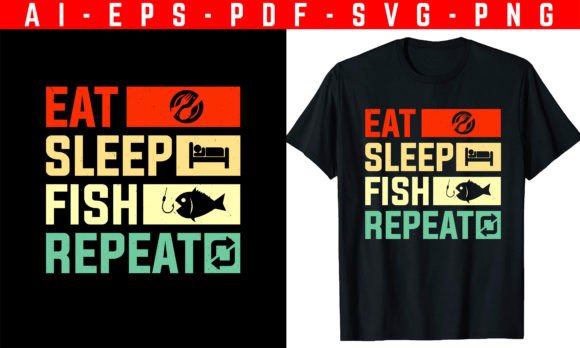
The Eat Sleep Fish Repeat T-Shirts Design immediately strikes a casual, fun tone. It’s clearly aimed at anglers, outdoor enthusiasts, and anyone who enjoys a good fishing pun. The layout feels balanced—neither too busy nor too sparse—with a repeating phrase that flows well around a central graphic, likely a fish or fishing-related icon. The font choice leans toward playful but readable, which is a big plus for embroidery use.
As an embroidery designer, I appreciate how the design doesn’t overcomplicate things. It’s got a laid-back personality that would suit casual apparel and accessories, especially those marketed toward men’s or unisex outdoor gear. The visual style seems versatile enough to work on a variety of fabric types and garment styles, which is always a bonus when planning multiple product lines.
Real-World Use: From T-Shirts to Custom Embroidered Tote Bags
Let’s say I’m prepping a batch of custom embroidered tote bags for a local fishing outfitter. I need a design that’s recognizable at a glance, works well on medium-weight cotton canvas, and won’t distort with repeated use. The Eat Sleep Fish Repeat T-Shirts Design fits the bill here. Its repeating text layout allows for a dynamic visual flow that looks intentional and not cluttered.
I tested it on a mock sweatshirt design, and the placement worked well on the chest and back. The lettering remains legible even at smaller sizes, which is important for Etsy sellers or boutique brands that may offer different garment sizes. For baby items, I’d probably scale it down and simplify, maybe just using one iteration of the phrase with a small fish graphic. It’s adaptable, which is key when you're creating across multiple product types like personalized gifts, holiday merchandise, or small shop products.
Performance on Different Fabrics and Garments
When it comes to actual embroidery, this design holds up well on standard t-shirt cotton and heavier sweatshirt fleece. I noticed minimal distortion on stretchy fabric when using proper stabilizer underneath. That said, if you're applying it to curved surfaces like baseball caps, I’d recommend checking how the corners of the text lay down—sometimes repeated phrases can bunch up if the hoop placement isn’t precise.
On dark fabric, the contrast in thread color becomes critical. I tested it with white thread on navy, and the readability was good, but I’d still suggest using a black-and-white mockup first to ensure clarity. For layered garments like hoodies, the design doesn’t require excessive stitch density, so it layers nicely without adding too much bulk. That’s a win for small business owners who want to keep production time and thread usage under control.
Where to Use It Carefully
This design isn’t ideal for very small hoop sizes. If you’re working with a 4x4 hoop, you may need to edit the layout to fit—perhaps using only part of the phrase. The detail level is moderate, so on textured fabrics like towels or thick denim, some of the subtleties in the lettering might get lost.
Also, the repeated text format can pose challenges on curved or uneven surfaces like baby onesies or curved cap fronts. In those cases, test on scrap fabric first to see how the satin and fill stitches perform. Dense stitch areas, especially in the letters, can pucker thin fabric, so choose your stabilizer carefully and adjust the tension if needed.
Visual Impact and Market Appeal
From a design value standpoint, the Eat Sleep Fish Repeat T-Shirts Design brings a strong visual identity. It’s got good giftability for Father’s Day, birthdays, or as part of a boutique product line. The phrase itself is catchy and recognizable, which helps with brand consistency if you're selling through Etsy or at craft fairs.
For a handmade product, clarity is everything. This design maintains that clarity across most standard sizes and thread colors. It reads well from a distance and still holds up close, which is important for custom apparel and personalized gifts. The overall professionalism of the stitched result depends on your execution, but the base design gives you a solid foundation to work from.
Designer Notes: Practical Tips Before You Stitch
- Test on scrap fabric before applying to final garments, especially if you’re using a new stabilizer or thread type.
- Check thread color contrast by using black-and-white mockups to ensure legibility on both light and dark backgrounds.
- Review stitch density—if you notice puckering on thin fabric, reduce the density slightly or adjust the stabilizer layer.
- Confirm hoop size compatibility, especially if you're working with small hoops or curved surfaces like caps.
- Inspect small details like fish eyes or small letters in the phrase—these can get lost on textured or stretchy fabric.
- Use proper stabilizer based on fabric type—cutaway for stretchy materials, tear-away for stable cotton.
- Confirm licensing before using the design in commercial projects or selling finished items, especially if you're an Etsy seller or digital product reseller.
Final Thoughts: A Versatile Design for Outdoor-Themed Embroidery
The Eat Sleep Fish Repeat T-Shirts Design is a solid choice for embroidery designers and small business owners looking to expand their outdoor-themed product lines. Whether you're creating custom apparel, embroidered patches, or printable mockups, this design offers flexibility and a strong visual hook.
It’s not without its limitations—especially on tricky fabrics or small hoops—but with a bit of planning, it can be a reliable asset in your design toolkit. For those selling on Etsy or at craft fairs, this kind of design can help build a cohesive brand around a popular niche theme. Just remember to test thoroughly and adjust for your specific project needs before production.